
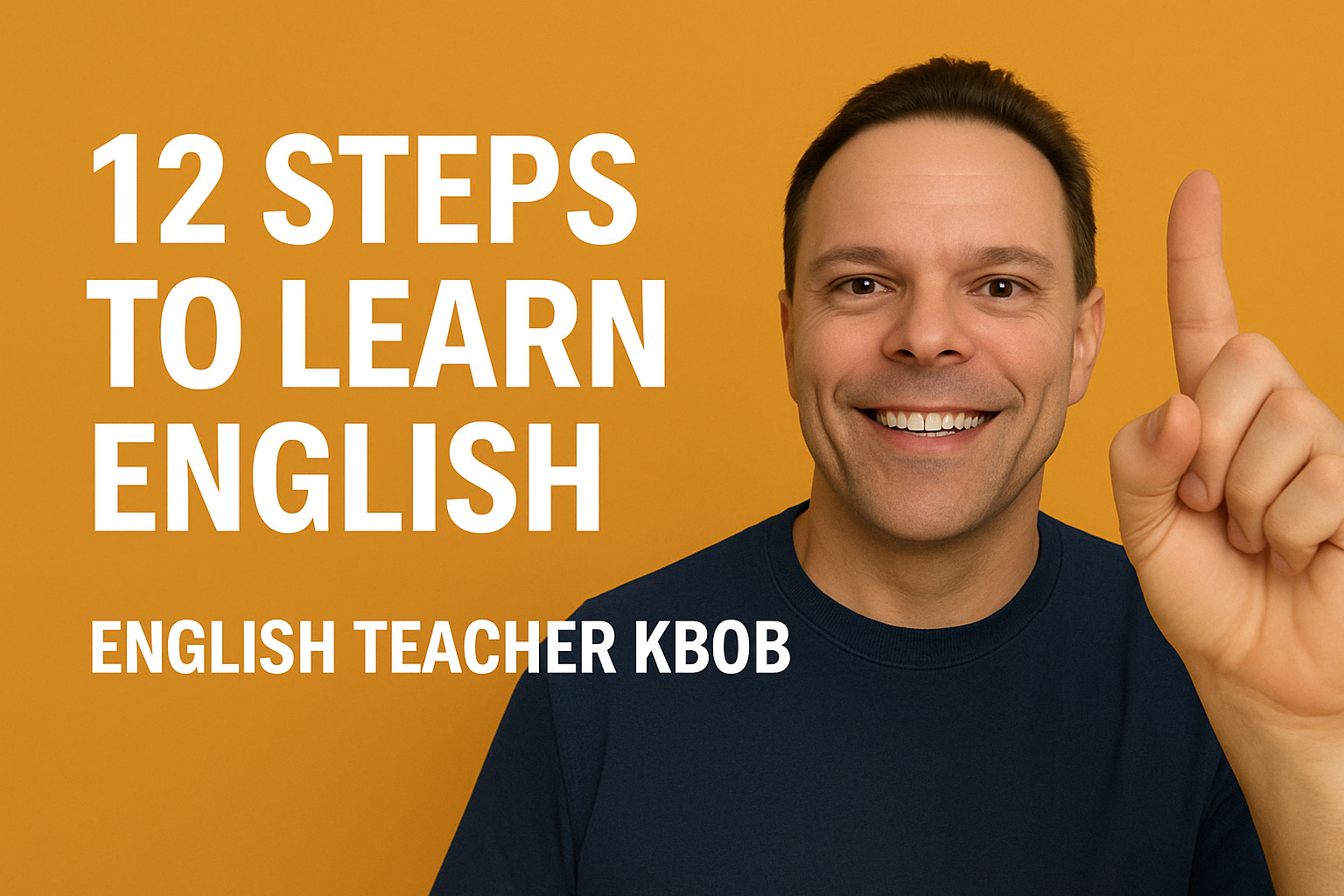
Discover the 12 simple, powerful steps to learn English as an adult. This roadmap will help you stay motivated and make real progress.
Affiliate Disclosure: Guess what? When you click and buy through our links, you’re doing more than improving your game. You’re supporting us in a way that doesn’t cost you extra but helps us keep bringing you the best drills and tips. It’s a slam dunk for both of us!
Table of Contents
- Introduction
- Main Question: How Can I Learn English Step-by-Step as an Adult?
- Step 1: Accept That English Is Crazy
- Step 2: Learn the Alphabet and Sounds
- Step 3: Master Numbers and Dates
- Step 4: Grow Your Vocabulary Daily
- Step 5: Understand the Parts of Speech
- Step 6: Speak and Write About Yourself
- Step 7: Ask and Answer Everyday Questions
- Step 8: Learn from Native Speakers
- Step 9: Practice with a Study Buddy
- Step 10: Speak Often, Even If It Feels Awkward
- Step 11: Read and Write Every Day
- Step 12: Embrace Mistakes and Be Patient
- Get Help & Keep Going
Introduction
Learning English as an adult can feel overwhelming, especially when you aren’t sure what to study first or what to practice next.
This 12-step roadmap gives you a practical way to keep moving forward. You don’t have to complete every step perfectly before moving to the next one. Use the steps as a guide, practice consistently, and return to them whenever you need help deciding what to work on.
Brand-new to English? You may want to begin with Foundation 0A: Personal English, our step-by-step course for true beginners. When you’re ready to start building complete sentences, continue with Foundation 0B: Sentence Foundations.
Already know some English? Start with the step below that best matches what you need.
Main Question: How Can I Learn English Step-by-Step as an Adult?
You can learn English step by step by building a strong foundation first and then practicing speaking, listening, reading, writing, vocabulary, and grammar regularly.There is no single perfect order for every learner. The 12 steps below give you a practical roadmap you can follow and return to whenever you need direction.
Step 1: Accept That English Is Crazy
English has rules, but it also has exceptions, unusual spelling, and words that don’t always sound the way you expect. Don’t let that discourage you.
Accepting that English can sometimes be confusing makes it easier to keep learning instead of getting frustrated.
Learn more about Rule #1: English Is a Crazy Language — And That’s Okay!
Step 2: Learn the Alphabet and Sounds
Learn the names and sounds of the English letters. Practice recognizing uppercase and lowercase letters, and listen carefully to how letters and common sounds are pronounced.
If you’re starting from the beginning, Foundation 0A includes step-by-step alphabet practice to help you build this skill.
Step 3: Master Numbers and Dates
Numbers are everywhere in everyday English. Practice saying and understanding numbers for your age, phone number, address, dates, birthdays, prices, and time.
Continue practicing with the Foundation 0A Numbers lesson and the Foundation 0A Age & Birthday lesson.
Step 4: Grow Your Vocabulary Daily
Learn a few useful English words every day. Focus on vocabulary you can use in real life—at home, at work, while shopping, at school, and when talking with other people.
Don’t just memorize individual words. Practice using new vocabulary in complete sentences so you learn both the meaning of the word and how to use it.
Review older words regularly while adding new ones. A small amount of vocabulary practiced consistently can grow into a strong working vocabulary.
Step 5: Understand the Parts of Speech
Every word in an English sentence has a job. The eight parts of speech help us understand those jobs: nouns, pronouns, verbs, adjectives, adverbs, prepositions, conjunctions, and interjections.
You don’t need to memorize everything about all eight at once. Start by learning to recognize what different words do in a sentence. This will make grammar and sentence building much easier as your English improves.
Pay special attention to nouns, pronouns, and verbs first. They are essential for building basic English sentences.
Step 6: Speak and Write About Yourself
Practice using English to talk and write about yourself. Start with useful personal information such as your name, age, birthday, country, phone number, address, family, and things you like and don’t like.
Say your answers out loud as well as writing them. The goal is to become comfortable using complete sentences to communicate real information about yourself.
These are the same essential personal-English skills you practice throughout Foundation 0A.
Step 7: Ask and Answer Everyday Questions
Practice asking and answering questions you use in everyday life. Start with questions about personal information, family, work, daily routines, likes and dislikes, and other familiar topics.
Don’t practice only one-word answers. When possible, answer in complete sentences.
For example:
Where do you live?
I live in Los Angeles.
What do you do every morning?
I drink coffee and get ready for work.
Practice both sides of the conversation: ask the question, answer it, and then switch roles.
Step 8: Listen to Real English
Listen to English as often as you can. Pay attention to how people pronounce words, connect sounds, ask questions, and use everyday expressions.
Use videos, conversations, podcasts, television, and other sources of natural English. You don’t need to understand every word. Listen for words and patterns you recognize.
Try this: listen to a short sentence, pause, and repeat it out loud. Then listen again and compare your pronunciation, rhythm, and speed.
The more real English you hear, the easier it becomes to recognize and understand it.
Step 9: Practice with a Study Buddy
English is a communication skill, so make speaking with other people part of your practice.
Practice with a classmate, friend, family member, teacher, tutor, or another English learner. You don’t need a perfect English speaker to practice together.
Take turns asking and answering questions. Practice short conversations, repeat difficult sentences, and help each other keep speaking.
Even a few minutes of real conversation can help you become more comfortable using English.
Step 10: Speak English Often, Even If It Feels Awkward
Speaking English can feel uncomfortable at first. That’s normal. The only way to become more comfortable speaking is to speak more often.
Don’t wait until your grammar or pronunciation is perfect. Use the English you know now.
Talk to classmates, coworkers, friends, teachers, or even yourself. Describe what you’re doing, answer questions out loud, or practice sentences from your lessons.
Mistakes are part of practice. Say the sentence, learn from the mistake, and try again.
A few minutes of speaking every day can build confidence over time.
Step 11: Read and Write English Every Day
Reading and writing regularly will help you recognize vocabulary, understand sentence patterns, and become more comfortable using English.
Read something in English every day. It can be a short lesson, message, story, sign, email, or anything else that matches your level.
Then write something of your own. Start small: write a few sentences about your day, your family, your plans, or something you learned.
Don’t worry about writing perfectly. Use the English you know, check your mistakes, and keep practicing.
A little reading and writing every day can make a big difference over time.
Step 12: Embrace Mistakes and Be Patient
Mistakes are part of learning English. You won’t always remember the right word, use the correct grammar, or pronounce everything perfectly—and that’s okay.
When you make a mistake, learn from it and try again. Don’t let the fear of making mistakes keep you from speaking, writing, or practicing.
Learning a language takes time. Some days you’ll notice your progress, and other days you may feel like you’re not improving. Keep going anyway.
Be patient with yourself, practice consistently, and focus on progress rather than perfection.
Rule number 1: English is a crazy language. You can learn it.
Download a free PDF version of this 12 step guide
Get Help & Keep Going
Learning English isn’t something you finish in one day. Keep practicing, keep using what you learn, and take the next step that’s right for you.
Brand-new to English?
Begin with Foundation 0A: Personal English.
Ready to build better sentences?
Continue with Foundation 0B: Sentence Foundations.
Already know some English?
Explore Beginner ESL Lessons for more grammar, vocabulary, speaking, pronunciation, and everyday English practice.
Not sure where to go next? Return to the Start Here guide for the complete ETKB learning roadmap.
Keep learning. Keep practicing. Keep going.
I thought your 12 steps to learning English were a great idea, and how you organized the steps and explained each step was easy to follow. I also like the encouragement you use and the join-free event, and ask me a question. Great job, look forward to reading more of your posts
Hi Florine, thanks for your comments. I love teaching English as a second language. There will be many more posts to follow.
KBob
This blog does such a great job of breaking down the overwhelming process of learning English into manageable and encouraging steps. I love how it starts by acknowledging that English is quirky. It instantly makes learners feel less alone in their struggles. The mix of mindset, practical tips, and real-world application is super helpful. I’m curious—what’s been the most effective step for your learners so far, especially among beginners?
Hi Kavitha, thanks for your comments. As for your question, the most effective step for beginner learners is and always will be the constant and consistent practice which is a combination of steps 8-11. That’s where the “magic” happens.
KBob