

Learn emotion vocabulary, ask and answer how you feel, and sing “If You’re Happy and You Know It” in this fun ESL lesson for beginners.
Affiliate Disclosure
Guess what? When you click and buy through our links, you’re doing more than improving your game. You’re supporting us in a way that doesn’t cost you extra but helps us keep bringing you the best drills and tips. It’s a slam dunk for both of us!
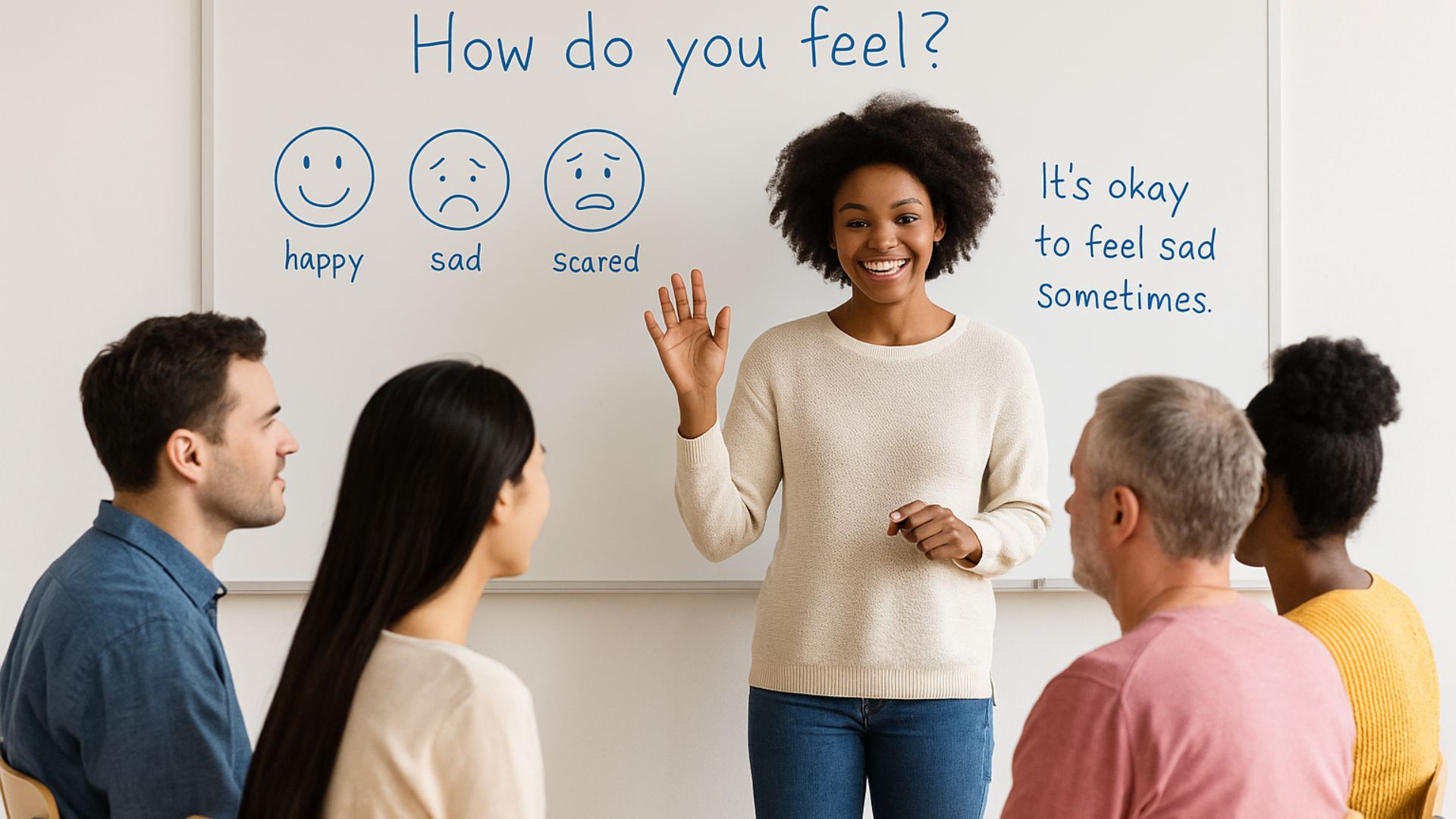
Saying of the Day: “It’s okay to feel sad sometimes.”
Table of Contents
- What are emotions?
- How can ESL students learn to express their emotions in English?
- Emotion Vocabulary & Picture Dictionary
- Emotion Definitions and Examples Table
- Warm-Up Discussion
- Song: “If You’re Happy and You Know It”
- Grammar Focus: Subject + Linking Verb + Adjective
- Speaking Practice
- Listening & Comprehension Quiz
- Downloadable Worksheet Sample
- Final Thoughts
- What do you think?
- Call to Action
What are emotions?
Emotions are feelings like happiness, sadness, anger, and fear. They show how we feel inside and help us connect with others. Learning to talk about emotions in English helps us share our thoughts and understand our friends better.
How can ESL students learn to express their emotions in English?
Beginner ESL students can learn to express their emotions in English through vocabulary-building, facial expression practice, songs, and structured conversation. The key is to keep it simple and fun while reinforcing vocabulary through pictures, listening, and speaking activities.
This beginner-friendly ESL lesson focuses on emotion vocabulary (happy, tired, sad, etc.) and uses music, conversation, and role-play to help students ask and answer the question: “How do you feel?”
Emotion Vocabulary & Picture Dictionary
- Happy
- Sad
- Tired
- Angry
- Surprised
- Annoyed
- Scared
- Shy
- Silly
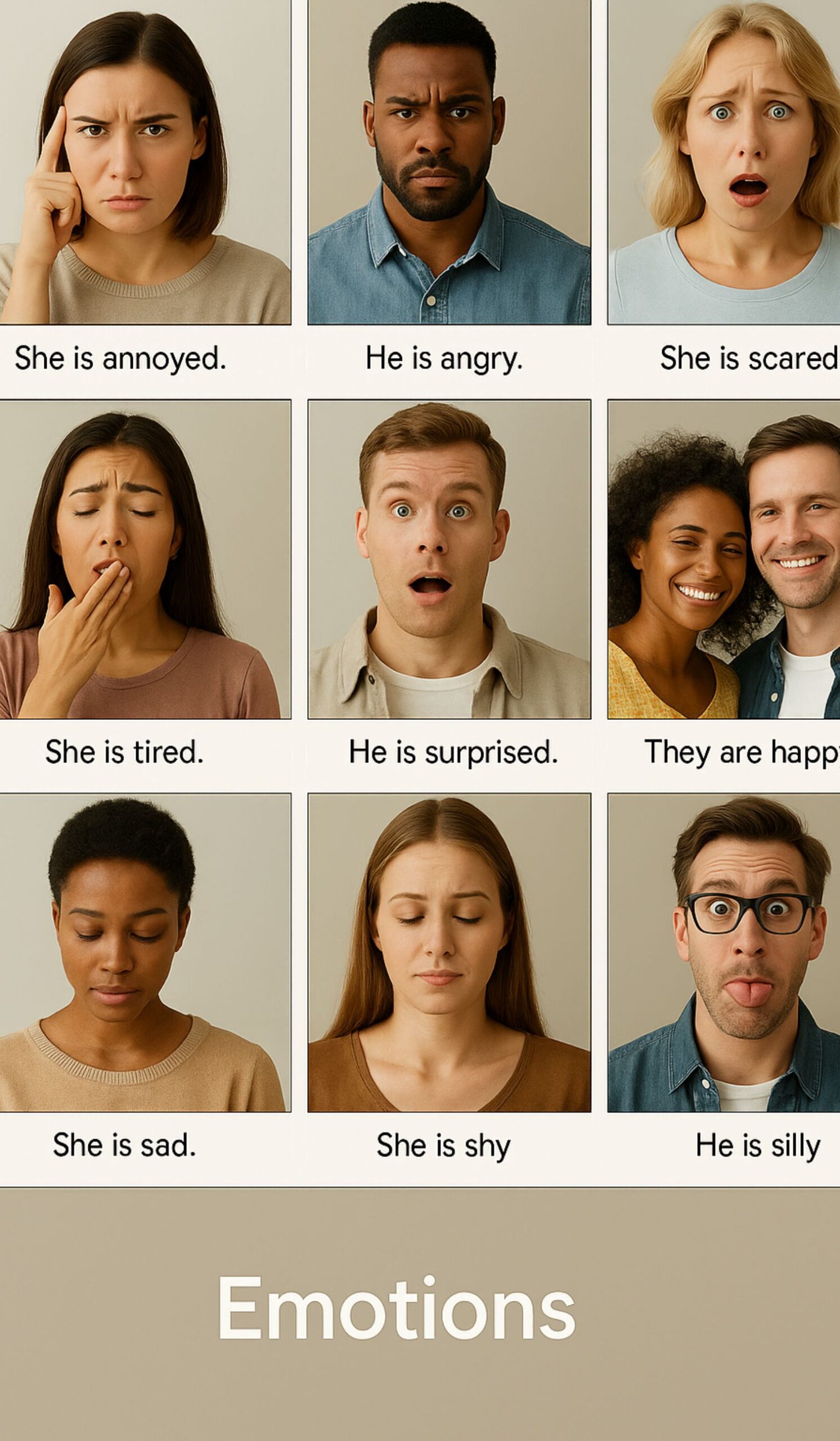
Students complete a matching activity and short writing task using these terms.
| Emotion | Definition/Synonym | Example of Behavior |
|---|---|---|
| Happy | Feeling good or joyful | Smile or laugh |
| Sad | Feeling unhappy or down | Cry or stay quiet |
| Tired | No energy or sleepy | Yawn or lie down |
| Angry | Feeling mad or upset | Raise voice or frown |
| Surprised | Feeling shocked or amazed | Open eyes wide or gasp |
| Annoyed | Feeling bothered or irritated | Sigh or cross arms |
| Scared | Feeling afraid or nervous | Shake or freeze |
| Shy | Feeling nervous around people | Look down or whisper |
| Silly | Feeling playful or goofy | Make funny faces or jokes |
Warm-Up Discussion
- How do you feel today?
- What makes you feel happy?
- What do you do when you feel sad?
Song: “If You’re Happy and You Know It”
This simple children’s song has universal appeal. Students sing along with gestures.
Lyrics: If you’re happy and you know it, clap your hands (clap clap)
If you’re happy and you know it, clap your hands (clap clap)
If you’re happy and you know it, then your face will surely show it
If you’re happy and you know it, clap your hands (clap clap)
Repeat with:
- stomp your feet
- shout “Hooray!”
- do all three!
Grammar Focus: Subject + Linking Verb + Adjective
- I feel tired.
- She is happy.
- They look surprised.
Students complete 12 grammar-based sentences identifying the correct adjective.
Speaking Practice
Students pair up and ask each other:
- How do you feel today?
- What makes you feel ___ (happy/sad/angry)?
- What do you do when you feel ___?
Students then act out one feeling and have others guess.
Listening & Comprehension Quiz
Includes 10 questions:
- Multiple choice
- True/false
- Picture identification
- Fill-in-the-blank
Downloadable Worksheet Sample
Want the full worksheet pack with picture dictionary, song lyrics, speaking cards, and quiz?
Get the complete resource on TPT
Final Thoughts
Understanding and expressing emotions is a vital part of language learning.
This beginner ESL lesson makes that process simple and fun by combining visuals, music, and real conversation. Learners not only gain new vocabulary but also develop emotional intelligence and confidence.
With repeated exposure to vocabulary and guided speaking practice, students begin to express how they feel with ease.
The lesson also promotes inclusivity, self-awareness, and a supportive classroom environment—values that go far beyond grammar drills. Emotions are universal, and this lesson reminds us that language is more than just words—it’s a connection to how we live, feel, and relate to each other.
What do you think?
Leave a comment below! How do you teach emotions in your ESL classroom? How do you deal with emotions? I’d love to hear your thoughts.
I always reply.
Call to Action
Join the Study Buddy Group on Facebook (click the link below)
Sign up for access to the full Free Resource Library
Visit The KBob Teacher Toolbox on TPT for more beginner ESL lessons!
This lesson plan is a treasure trove for ESL educators! The integration of emotion vocabulary with interactive activities like singing “If You’re Happy and You Know It” not only makes learning fun but also deeply engaging for students. I especially appreciate how the picture dictionary and grammar practice work together to reinforce the lesson—such a well-rounded approach!
I’m curious, have you found this lesson works equally well with both younger learners and teens? Also, do you have any favorite follow-up activities that help reinforce emotional vocabulary after this lesson?
It’s evident that a lot of thought went into creating a resource that’s both educational and enjoyable. Thank you for sharing such a valuable tool for teaching emotions in English!
Hi Alice, thanks for your comments. Yes, the lesson works well with all ages. Everyone has emotions. ESL students are not always sure what the emotions are called. The song, although for kids, works for all ages too. I tell the students we’re all big kids and they go along with it. I encourage students to sing the song, change the emotion from happy to whatever and practice with their kids or grandkids. They like the idea.
KBob